
新闻
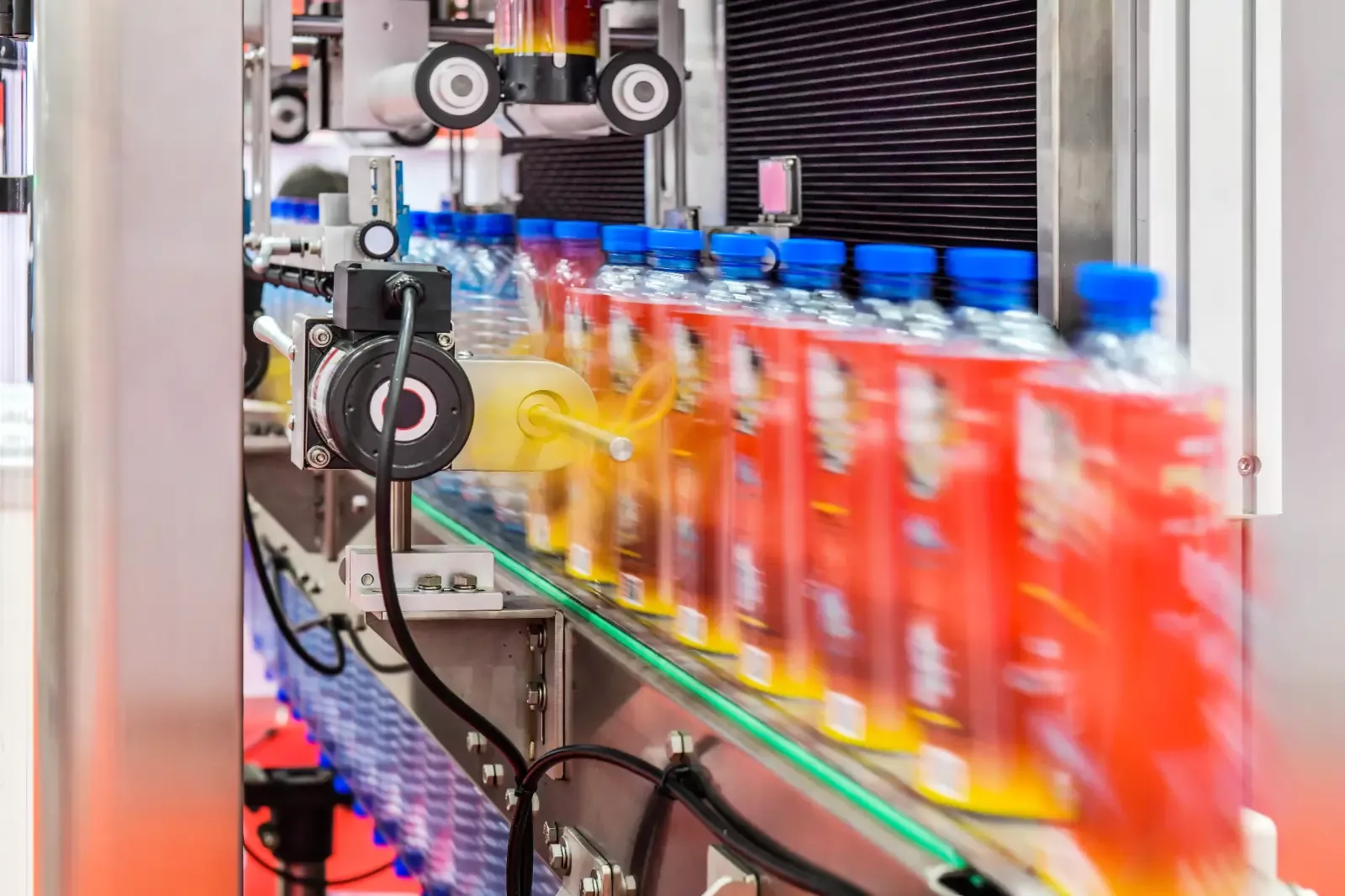
In the Beverage and Personal Care industries, label inspection represents one of the most complex challenges for automated quality control systems, especially in the case of transparent labels or labels matching the color of the container. The low contrast between the label material and the container, surface reflections and the geometrical variability of bottles make inspection unreliable unless an integrated approach is adopted that combines optics, lighting and software synergistically. This article illustrates how Opto Engineering addresses these applications through a complete bundle of machine vision components: high-resolution optics, illuminators optimized to enhance label contrast, reliable high-frame-rate cameras, and configurable software for image analysis tasks, device management within machines and user interfaces. The specific requirements of the Beverage and Personal Care sectors are analyzed, along with the most effective configurations for each use case.
This article covers the topic of label inspection in the Beverage and Personal Care sectors and the challenges they pose to industrial machine vision systems. The subject is developed following a path that starts from the nature of the problem - namely the low visibility of labels on often reflective or curved containers - and arrives at the hardware and software solutions that Opto Engineering makes available to integrators and automation professionals. The differences between the needs of the Beverage sector and those of Personal Care are analyzed, along with the most effective lighting techniques and the role and functionalities of image processing software. The goal is to provide a complete reference framework for those who design or evaluate the integration of optical inspection systems on high-speed production lines dedicated to label detection.
Topics covered in this article:
- Why is label inspection a challenge for machine vision systems?
- What are the specific requirements of the Beverage sector in label inspection?
- How is label quality control handled in the Personal Care sector?
- Which optical and lighting components are required to inspect labels?
- How does software-based analysis work in automated label inspection systems?
- What is the value of an integrated bundle approach for label quality control?
Why label inspection is a challenge for machine vision systems
Label detection and inspection is a critical use case in industrial machine vision.
Possible issues depend on the contrast between the label and its substrate (which can be chromatic or due to surface characteristics such as opacity), on specular reflections from label and substrate that can create artifacts, and on the often three-dimensional, rounded or irregular shape of both substrate and label. Two particularly critical cases are transparent labels, which transmit light and take on the color and texture of the underlying container, and labels of the same color and material as the substrate, for which generating a detectable contrast in the image can be a complex challenge.
These issues multiply when considering the real-world conditions of a production line: glass or PET containers of various shapes, high transport speeds reaching tens or hundreds of pieces per minute, batch-to-batch variations in label material, surface moisture and mechanical vibrations. In this context, a label inspection system must be robust, flexible and calibrated to guarantee a reliable detection rate without false positives that would interrupt the production flow.
Opto Engineering, as a company that designs, manufactures and markets all the components of a vision system - optics, cameras, illuminators and software - is uniquely positioned to configure solutions where every element has been conceived to work in harmony with the others. This integrated bundle philosophy is the foundation of the approach to label inspection in the Beverage and Personal Care sectors.
What are the specific requirements of the Beverage sector in label inspection
The Beverage sector is characterized by high production volumes, sustained line speeds and a wide variety of formats: glass bottles, PET bottles, cans and composite-material containers. Label quality control in the Beverage sector must meet precise requirements that go well beyond simple presence/absence verification.
The main inspections required on a Beverage line include:
- presence/absence verification of the label on the container;
- positioning control in terms of both horizontal centering and height;
- physical integrity assessment, including the absence of creases, tears, bubbles or missing portions;
- reading of reference codes and batch numbers via OCR inspection;
- verification of the absence of double labels, a condition in which two labels are erroneously applied overlapped on the same container.
For cylindrical containers, which represent the vast majority in the Beverage sector, inspection must cover the lateral surface at 360 degrees. An efficient solution is the use of pericentric lenses that capture a 360° image of the container in a single acquisition, eliminating the need for complex and costly multi-camera systems. This architecture reduces the mechanical footprint of the system and simplifies both the integration of the vision system into the machine and its configuration.
Line speed also imposes stringent requirements on exposure duration: acquisition times must be short enough to capture an image of the moving container without introducing blur. The use of strobed illuminators with integrated driver or paired with dedicated controllers (LTDV series) makes it possible to reduce the effective exposure time by more than an order of magnitude, ensuring sharp images even at high speeds.
How label quality control is handled in the Personal Care sector
The Personal Care sector, which includes products such as shampoos, creams, detergents, toothpastes and cosmetics, shares many of the challenges of Beverage but presents some specificities that require an adaptation of machine vision solutions. Containers are often made of opaque or semi-transparent plastic, with irregular curvilinear surfaces and geometries that vary significantly from product to product. The label, frequently transparent or semi-transparent, must conform to the shape of the bottle without creases and must be positioned precisely with respect to graphic or functional elements on the container.
A critical aspect typical of the Personal Care sector is format variability: production lines often handle dozens of different sample types, each with different dimensions, shapes and label types. Label inspection systems must therefore be quickly configurable, with minimized format changeover times. The vision software plays a fundamental role in this respect, allowing operators to modify inspection parameters without requiring complex system interventions.
Which optical and lighting components are required to inspect labels
Designing an effective machine vision system for label inspection requires the selection and integration of hardware components (optics, illuminators and cameras) and image processing software. Each product category must be chosen according to the characteristics of the application, and the components must be compatible with each other to guarantee optimal performance.
Optics: from fixed focal length to pericentric systems
The choice of optics is the starting point for any industrial vision system dedicated to labeling. For standard presence/absence and label positioning applications on flat or low-curvature surfaces, fixed focal length and macro lenses represent the most common solution. Fixed focal length lenses offer great flexibility in the choice of focal length itself, field of view, working distance and adjustment of brightness and depth of field (i.e. aperture). Macro lenses are the best choice for high-resolution inspection applications on small details, offering near-zero distortion and high optical resolution even across different colors. Both solutions are available for sensors of different sizes and resolutions. For 360° inspection applications on cylindrical containers, pericentric lenses allow simultaneous imaging of the lateral and top surfaces, reducing the complexity of the hardware system.
Lighting: the discriminating factor for labels
In label control within the automation world, lighting is often the most critical factor. Depending on the vision application to be realized, the contrast between label and bottle - or related to the label features that need to be inspected such as drawings, writings, textures, scratches or creases - can be generated by transmittance, color or light reflections.
The main lighting geometries adopted by Opto Engineering for this type of application are:
- High-power ring lights: ideal in combination with 360° view optics. By adjusting the position and choosing the most suitable illumination angle, they offer great flexibility to obtain contrasts of surface features, or to emphasize edges and surface characteristics of labels while avoiding disturbances from direct reflections.
- RGB LED bar lights: for applications based on chromatic contrast, for example to distinguish labels of a different color from the background or to detect printing defects on colored labels. They offer great flexibility in positioning and orientation.
Cameras: resolution and speed at the service of inspection
The quality of the acquired image depends critically on the characteristics of the sensor and the camera. For label inspection applications on Beverage and Personal Care lines, the ITALA cameras by Opto Engineering, designed and manufactured in Italy, offer high performance thanks to the latest-generation Sony sensors, with high resolutions, global shutter and GigE Vision interface for highly reliable industrial communication.
ITALA cameras are particularly well suited for high-speed in-line applications, thanks to advanced functionalities such as the Sequencer, which enables dynamic management of multiple acquisition configurations, image compression to optimize bandwidth and storage, and Chunk Data support, useful to associate acquisition metadata with each image in a structured way.
With a view to integration on industrial lines, the ITALA series supports encoders for synchronization with product movement and industrial communication protocols such as Modbus and RS232/RS485, guaranteeing effective dialogue with PLCs and automation systems; in this context as well, the use of Chunk Data facilitates traceability and diagnostics.
For an integrated approach with different lighting solutions, the cameras provide 4 optoisolated outputs and 2 inputs, enabling direct control of illuminators and robust, secure management of trigger and feedback signals.
Finally, for color inspection applications, the presence of the Color Correction Matrix enables accurate and repeatable chromatic reproduction - a key element for label and packaging quality control in the Beverage and Personal Care sector.
How analysis software works in automated label inspection systems
Software is one of the fundamental pillars of any vision system aimed at guaranteeing effective labeling. A high-performance vision system cannot do without the acquisition of high-quality images, which show with high contrast the features to be observed thanks to quality optics, optimized lighting and a reliable camera. All these characteristics enable the software to perform robust analysis, based on algorithms that can reliably and accurately detect the presence, position and integrity of labels, even in the face of possible variations in environmental conditions. Other fundamental aspects are the ability to manage communication with the devices on the machine in an integrated way, and to offer a simple and configurable user interface, for example for format or batch changes.
To meet market needs, Opto Engineering has developed OEVIS, an advanced software environment for the rapid development of industrial machine vision applications that does not require coding. OEVIS is designed for system integrators, machine vision specialists and automation engineers, and combines development and runtime functionalities on a single platform. Among the features relevant to label inspection applications:
- Synchronous or asynchronous multi-camera acquisition management, essential for inspection systems with more than one camera.
- Parallel processing via multi-threading, which makes it possible to simultaneously analyze images from multiple cameras and parallelize processing algorithms, optimizing elaboration time and line speed.
- Support for industrial communication protocols - Modbus, Ethernet/IP, OPC UA and others - for direct integration with PLCs and line control systems.
- Operator-configurable interface, which allows inspection parameters to be modified and format changeovers to be carried out.
From an algorithmic standpoint, label inspection presents complexities due to the high variability of possible vision tasks, and to the need to cope with possible variations both in sample reflections and in environmental conditions. Robust analysis software must make it possible to handle these situations reliably, thanks to a broad offering of processing algorithms and to the possible contribution of algorithms based on machine learning or deep learning. The possibility of using a no-code approach allows developers to test and validate the most effective processing algorithms with great ease, focusing on the image analysis strategy and parameter optimization while directly visualizing the results. A significant advantage offered by OEVIS is the ability to develop the image analysis algorithm, device communication and configuration, and the user interface all in the same environment.
Finally, OEVIS offers the flexibility to combine traditional analysis algorithms with machine learning and deep learning algorithms, allowing the writing or importing of code based on learning models and guaranteeing developers full control.
What is the value of an integrated bundle approach for label quality control
The most significant distinction between a label inspection system built with components from different suppliers and a system built around an integrated bundle of components designed to work together lies in performance consistency and the simplicity of integration and maintenance.
Opto Engineering positions itself as The Machine Vision Company®: one of the few companies in the world able to design, produce, market and support the full range of components that make up an industrial vision bundle (optics, cameras, illuminators and software). This uniqueness translates into concrete benefits for integrators and automation specialists who need to implement a label control system for automation.
First, component compatibility is guaranteed upstream: optics are designed with knowledge of the characteristics of camera sensors, and illuminators are developed taking into account the sizes, optimal working conditions and acquisition geometries of the optics. This reduces the time needed to fine-tune the system and minimizes the risk of unexpected incompatibilities that often emerge when integrating components from different brands.
Second, technical support is centralized: Opto Engineering's Application Engineers have a complete view of all system components and can intervene with solutions that act on optics, lighting, camera and software in a coordinated manner, without responsibility for the result being fragmented among multiple suppliers.
On a practical level, labeling vision systems built by integrating Opto Engineering components find application in various production scenarios: high-speed Beverage bottling lines where in-line inspection is required at sustained rates (tens or hundreds) of pieces per minute, Personal Care packaging lines with frequent format changeovers, pharmaceutical applications where label inspection combines with OCR reading for batch traceability, and installations in harsh environments where ITALA IP cameras provide adequate protection against moisture and contaminants.
Label quality control in the Beverage and Personal Care industry is an application that requires specific expertise and quality components. Transparent labels, in particular, pose challenges that cannot be solved by optimizing a single element of the system: a synergistic integration between high-resolution optics, industrial camera and lighting designed to enhance the specific contrast of the transparent label - along with robust and configurable analysis software - is required.
Opto Engineering offers a complete and coherent portfolio that covers all these aspects: from pericentric lenses for 360° inspection of cylindrical containers, to industrial cameras, to illuminators with continuous and strobed modes for maximum sharpness at high speeds, through to OEVIS software for rapid development of vision applications with no coding required. The result is a label inspection system designed to operate reliably in real-world production conditions, ensuring consistent and traceable quality control along the entire line.
The ability to carry out preliminary feasibility studies, specialized technical support and the guarantee of compatibility between components from the same ecosystem make Opto Engineering a reference partner for anyone who needs to design or optimize a label inspection system, particularly in the Beverage and Personal Care sectors.